
Blog
Building A House? Here’s How to Make It Solar-Friendly

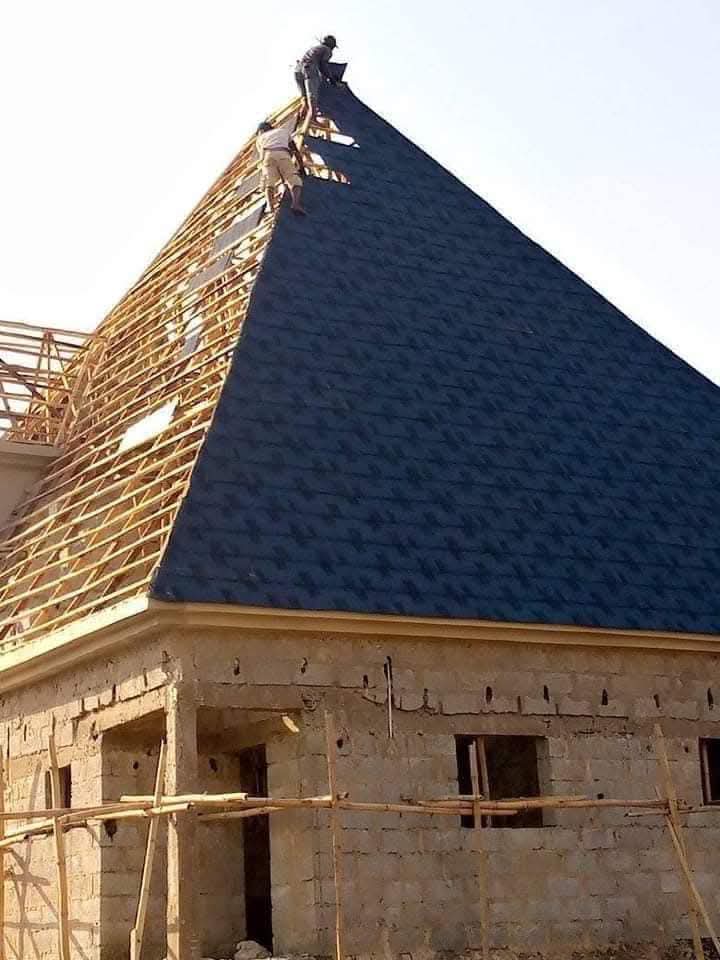
Most architects and builders don’t think about solar when designing your home. Here’s what to tell them – before the blocks go up.
So you’re about to build a house. Congratulations. You’ve bought the land, maybe approved a plan, and you’re ready to start laying blocks.
But here’s something most people don’t think about until it’s too late: Is this house designed to work with solar power and be energy efficient?
Not “can I add solar panels later?” — because yes, you can technically bolt panels onto almost anything. The real question is whether your building will make solar easy, efficient, and affordable to install… or whether your architect has unknowingly designed a house that will fight solar energy at every turn.
We’ve installed systems for clients who had to spend extra hundreds of thousands of naira – sometimes millions – to work around design decisions that could have been avoided if someone had mentioned solar during the building stage. Cables chased through finished walls. Panels mounted at awkward angles because the roof shape left no choice. Battery systems crammed into corridors because nobody planned a space for them.
This article covers everything you need to discuss with your architect, structural engineer, and builder before a single block goes up. If you’re already building, read it anyway — some of these changes can still be made mid-construction.
Let’s get into it.
The #1 Enemy: Your Roof
This is the single biggest issue we see, and it’s so common in Nigeria that it deserves its own section.
Walk around any Nigerian neighbourhood — Lekki, GRA Port Harcourt, Asokoro, anywhere — and look at the roofs. You’ll notice a trend that’s gotten worse over the past decade: extremely steep roof slopes.
These are the roofs that builders and architects call the “send down the rain” design. Very steep pitch, sometimes 40 to 50 degrees or more. They look dramatic and modern. And they are absolutely terrible for solar panels.
Here’s why this matters:
The Angle Problem
Nigeria sits between roughly 4° and 14° north of the equator. This means the sun is almost directly overhead for most of the year. For solar panels to capture the maximum amount of energy, they need to be tilted at a relatively low angle — roughly 5 to 15 degrees from horizontal, depending on your exact location. In Lagos (about 6.5° latitude), the ideal tilt is around 6 to 7 degrees. In Kano (about 12° latitude), it’s around 10 to 12 degrees.
Now think about what happens when you put solar panels on a roof that’s pitched at 40 or 45 degrees. The panels are pointing too steeply towards the horizon rather than up at the sun. You lose significant energy production — easily 15-25% compared to the optimal angle. That’s not a small number. On a system designed to produce 5kWh per day, you might only get 3.8-4.2kWh. Over 20 years, that’s a lot of wasted energy you paid for panels to capture.
The Safety Problem
Steep roofs are dangerous to work on. Period. Installers need to climb up there to mount rails, secure panels, run cables, and occasionally maintain the system. On a moderate slope, this is routine work. On a very steep roof, it becomes genuinely hazardous — and more expensive because of the extra safety equipment and time required.
Some installers will refuse steep roof jobs outright. Others will charge significantly more for the additional risk and equipment. Either way, you’re paying more than you should.
The Shading Problem
Very steep roofs with multiple ridges, valleys, and gables create shading problems. Parts of the roof cast shadows on other parts depending on the time of day. Even partial shading on a solar panel dramatically reduces its output — a shadow on just one cell can reduce the entire panel’s production because of how the cells are connected in series.
The more complex your roof design, the fewer usable square metres you have for panels. We’ve seen beautiful houses with 300 square metres of roof area where only 40-50 square metres were actually suitable for solar installation after accounting for slopes, shading, and orientation.
What to Do Instead
Aim for a roof pitch between 5 and 20 degrees on at least one large section of your roof. This is still enough to shed rain effectively (Nigeria’s rainfall is heavy but the volume drains fine on moderate slopes), and it gives you an excellent surface for solar panels.
If your architect insists on a steep design for aesthetic reasons, compromise: have the front-facing roof steep for the look, and the rear or side-facing roof at a gentler slope for solar. This gives you the best of both worlds.
Better still, design a flat or nearly flat roof section specifically for solar. A parapet wall around a flat concrete roof section provides a clean, accessible area where panels can be mounted on adjustable frames at the perfect angle. This is the ideal setup and costs far less to install on than working with roof slopes.
Orientation matters too. In Nigeria, a south-facing roof surface captures the most annual sunlight, but the difference between south, east, and west orientations is smaller than you might think because we’re so close to the equator. A north-facing roof is the only truly poor option. Tell your architect that the largest uninterrupted roof surface should face anywhere from east through south to west.
The Window Problem: Tiny Windows, Giant AC Bills
Here’s a trend that baffles anyone who understands tropical building design: Nigerian homes are being built with smaller and smaller windows.
Drive through any new estate and you’ll see it. Windows that look more like slots than proper openings. Floor plans where bedrooms have a single small window on one wall. Living rooms with windows only on one side.
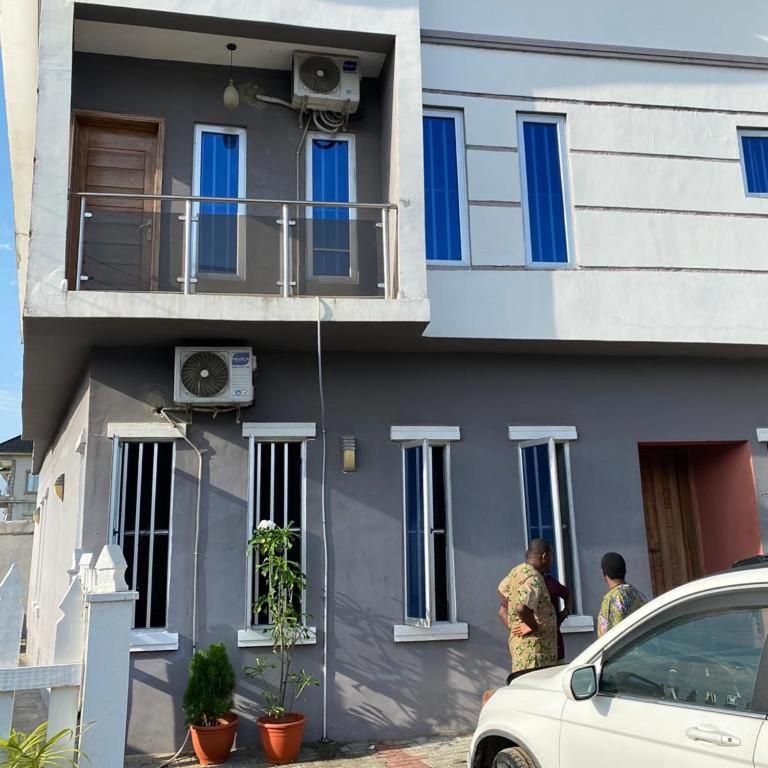
There seems to be a belief that smaller windows mean better security, lower construction costs, or a more “modern” look. Whatever the reason, it’s costing homeowners a fortune in electricity because those same houses become ovens without air conditioning.
Why This Matters for Solar
Air conditioning is the single largest power consumer in most Nigerian homes. A typical 1.5HP split AC unit draws about 1,100-1,200 watts. Run two of those for 8 hours and you’ve consumed roughly 19kWh — that’s a massive battery system needed just for cooling.
But here’s what our grandparents understood that modern architects seem to have forgotten: a well-ventilated house in Nigeria doesn’t need AC for most of the day.
Cross ventilation — having windows on opposite walls of a room — allows breeze to flow through the house. Research shows this can reduce indoor temperatures by 4-5°C compared to a sealed room, and can make conditions comfortable for the majority of the day without any mechanical cooling. Studies on buildings in hot, humid climates similar to Nigeria found that cross ventilation can reduce discomfort hours by up to 58%.
Think about what that means for your solar system. If your house is designed so that you only need AC for a few hours in the hottest part of the afternoon instead of running it all day, your battery requirement drops dramatically. Instead of needing a 15-20kWh battery bank, you might be comfortable with 7-10kWh. That could save you millions on your battery investment alone.
Design for Ventilation
Tell your architect you want:
Large windows on opposite walls of every room. This isn’t about going back to louvre blades from the 1970s (though those actually worked brilliantly for airflow). Modern casement or awning windows in generous sizes on facing walls will transform how your house feels.
High ceilings where possible. Hot air rises. A ceiling height of 3 metres instead of the standard 2.7 metres gives that hot air somewhere to go above your head level. Combined with vents near the top of walls or in the roof space, this creates a natural stack effect that pulls fresh air through the house as hot air naturally is lighter than cold air and floats above.
Covered openings (verandas, overhangs, louvers). The reason people build small windows is partly fear of rain getting in. The solution isn’t smaller windows — it’s proper overhangs and shading devices that keep rain out while allowing air in. A 600mm overhang above a window lets you leave it open in all but the most sideways rain.
Window placement that considers prevailing wind direction. In most of southern Nigeria, the prevailing wind is from the southwest. Your largest inlet windows should face that direction, with outlet windows on the opposite (northeast) wall.
The bottom line? A house designed for natural ventilation needs less air conditioning, which means a smaller solar and battery system, which means significant cost savings. It’s all connected.
Plan a Proper Space for Your Inverter and Battery System
Walk into most Nigerian homes with solar systems and you’ll find the inverter wedged under the stairs, batteries sitting in a corner of the kitchen, or the entire system crammed into a hallway where everyone has to squeeze past it.
This isn’t just ugly — it’s a technical problem. Inverters and batteries need proper conditions to perform well and last long.
What Your Equipment Needs
Ventilation. Inverters generate heat during operation and need airflow around them. Batteries perform best and last longest when kept at reasonable temperatures — ideally below 35°C. In Nigeria’s climate, this means the space can’t be an enclosed cupboard with no air movement. It doesn’t need air conditioning, but it needs ventilation.
Minimum 30cm clearance around the inverter on all sides. This isn’t a suggestion — most manufacturers require it for warranty validity. Battery cabinets need similar clearance for heat dissipation.
A dry, sheltered location. Not outdoors exposed to rain. Not in a bathroom. Not next to the kitchen stove. A dedicated utility room, a garage wall, or a properly ventilated store room are ideal.
Structural support. A fully loaded battery system can be heavy. A wall-mounted 5kWh lithium battery weighs about 45-50kg. A cabinet system with 14-17kWh can weigh 150kg or more. Your wall needs to be structural (not a partition) and your floor needs to handle the weight.
Easy access for maintenance. Batteries and inverters need occasional inspection, firmware updates, and potential servicing. Putting them behind a mountain of stored items in your boy’s quarters isn’t ideal.
The Smart Move: Design a Utility Room
The smartest thing you can do during building is include a small utility/plant room in your design. This doesn’t need to be large — 2m x 2m is often sufficient. Think of it as the technical heart of your home.
This room would house your inverter, batteries, changeover switch (or automatic transfer switch), distribution board for the solar circuit, and eventually your charge controller if you add solar panels. Having everything in one accessible, ventilated space makes installation cleaner, maintenance easier, and troubleshooting faster.
Put this room on an external wall so ventilation can be achieved with a couple of louvred vents — no AC needed, just airflow. Include adequate power sockets and a light. Make sure the door is wide enough to get battery cabinets through (standard internal doors are fine, just don’t choose something unusually narrow).
If you’re building a bungalow with limited space, even a dedicated section of your garage or car port works — just ensure it’s protected from rain and has ventilation.
Separate Wiring: The Decision That Saves You Money Twice
Here’s something that will save you significant money and headaches: run separate electrical wiring for your solar/inverter circuits from the very beginning.
Most existing homes in Nigeria have a single electrical circuit that powers everything from a single distribution board. When you add a solar system, you either have to put the entire house on the inverter (which requires a much larger and more expensive system) or pay an electrician to rewire sections of the house to separate “essential” and “non-essential” circuits. This rewiring in a finished house means chasing cables through decorated walls, disturbing ceiling finishes, and general disruption.
What Separate Wiring Looks Like
During construction, your electrician installs two separate distribution boards (commonly called DB boards):
DB 1 — Essential loads (inverter-backed): This powers everything you want to run during an outage — lights, fans, refrigerator, TV, internet router, security systems, select power sockets.
DB 2 — Non-essential loads (grid only): This powers heavy appliances that you’re happy to run only when grid power or a generator is available — electric cooker, water heater, washing machine, electric iron, workshop tools.
Both boards are fed from the mains when grid power is available. During an outage, only DB 1 switches to inverter/battery power. This means your battery system only needs to be large enough for your essential loads — not the entire house.
This is directly related to how you size your battery system. Separating your loads at the building stage is far cheaper than retrofitting later and means your inverter and battery investment is optimised from day one.
Don’t Forget Conduits
Even if you’re not installing solar immediately, run empty conduit pipes from the roof area down to where your utility room or inverter location will be. This is incredibly cheap during construction — just PVC conduit embedded in the wall during plastering. When you’re ready to install solar panels, the installer can pull DC cables from the roof down through the conduit without any need to chase walls or run exposed cables.
Run at least two 25mm conduits — one for the DC solar cables and one spare for future expansion or communication cables. If your roof is accessible via a manhole, a conduit from the utility room up into the roof space is sufficient. If it’s a flat concrete roof, run the conduit to exit at the parapet level.
This small investment during construction can save you thousands in retrofitting costs later. It’s the definition of thinking ahead.
Roof Structure: Built to Carry Panels
Solar panels aren’t heavy — a typical 550W panel weighs about 27-30kg and covers roughly 2.3 square metres. But the mounting frames, rails, and the wind load they create do add up. Your roof structure needs to handle this.
For Timber Truss Roofs (Most Common in Nigeria)
Make sure your trusses are spaced at standard intervals (typically 600mm or 900mm centres) and that the timber is properly sized for the span. The additional load of solar panels is usually within the safety margin of a well-built roof, but weak or widely-spaced trusses can be a problem.
Tell your structural engineer that solar panels will be mounted on the roof and ask them to confirm the truss design accommodates the additional dead load (about 15-20kg per square metre including mounting hardware) plus the wind load.
For Flat Concrete Roofs
This is actually the best scenario for solar. Concrete roofs can easily support the weight of panels and frames. Just make sure your waterproofing membrane is properly done (panels will be on the roof for 25 years, so the waterproofing under them needs to last), and include mounting bolt anchors or leave access points in the roof slab for attaching the panel frames.
Crawl Space and Roof Access
If your house design includes an attic or roof space (the area between the ceiling and the roof sheets), make sure there’s a proper access hatch. This should be at least 600mm x 600mm — big enough for a person to get through — and located somewhere accessible, not above a toilet or inside a wardrobe.
Installers need access to the roof space to run cables, secure mounting brackets from underneath, and perform maintenance. A house with no roof access means every cable run has to be external (ugly) or the installer has to cut through your ceiling (expensive and messy).
Better yet, if your roof space has enough height (at least 1 metre at the lowest point), it can serve as a service corridor for running cables from the panels to the utility room below. This keeps everything hidden and protected.
Lightning Protection: Don’t Skip This
Nigeria’s tropical climate means frequent thunderstorms, especially between April and October. Lightning strikes are a real threat to solar installations — not because the panels attract lightning (they don’t, that’s a myth), but because a nearby strike can send a surge through your entire electrical system and destroy your inverter, charge controller, and battery BMS in seconds.
During construction, install a proper earthing system. This means copper earth rods driven into the ground and connected to your electrical system’s earth bar. Your solar installer will add surge protection devices (SPDs) at the panel level and at the inverter, but these only work if there’s a proper earth path for the surge energy to dissipate into.
A good earth system costs very little during construction but is expensive and disruptive to retrofit. Tell your electrician you want a dedicated earth rod for the solar system in addition to the standard building earth.
Landscaping: Think About Shade (The Wrong Kind)
Most people plant trees around their compound for shade and aesthetics. That’s great — trees reduce ambient temperature and make outdoor spaces more comfortable. But be strategic about where you plant them.
Trees on the south, east, or west side of your house will eventually grow tall enough to shade your roof — and shade is the enemy of solar production. Even partial shade from a tree branch across one panel can reduce your system’s output significantly.
Plant tall-growing trees to the north of your building where they won’t cast shadows on the solar panels. On the south, east, and west sides, stick to lower-growing shrubs or trees that you can keep trimmed below your roofline.
If you already have established trees that shade your proposed panel location, your installer may need to use microinverters or power optimisers instead of a standard string inverter, which adds cost. Better to plan around trees from the start.
Roof Colour and Insulation: Comfort Without AC
This is related to the window discussion above but deserves its own mention. In Nigerian climate, your roof absorbs enormous amounts of solar heat and transfers it into your living space. This is why upstairs rooms in most Nigerian houses are unbearably hot without AC.
Roof Colour
Light-coloured roofing sheets (silver, light grey, off-white) reflect more solar radiation than dark colours (dark green, charcoal, dark blue). The temperature difference in the roof space can be 10-15°C between a light and dark roof. That directly translates to comfort inside and reduced AC demand.
Insulation
Installing insulation material directly under your roofing sheets or above your ceiling is one of the most cost-effective energy-saving measures you can take. Research on Nigerian buildings has demonstrated that combining roof insulation with proper ventilation can reduce cooling energy demand by 30-44%.
Options include aluminium foil-backed insulation (relatively affordable), rigid foam boards, or fibreglass batts. The cost is modest during construction but the savings on AC running costs (and therefore battery capacity) over 20 years are massive.
Think about it this way: every kWh of cooling you avoid needing is a kWh less battery capacity you have to buy. At current battery prices in Nigeria, that’s real money. If insulation reduces your AC runtime by just 3 hours per day, that’s roughly 3.5kWh saved daily — which could mean the difference between needing a bigger or smaller battery bank.
Water Heating: Go Solar Thermal Too
While you’re planning for photovoltaic (electricity-generating) solar panels, consider also installing a solar water heater. These are simple, affordable, and incredibly effective in Nigeria’s climate.
A solar water heater uses the sun’s heat directly to warm water — no electricity needed. Pre-plumb your bathrooms and kitchen with a hot water line from the roof where the solar water heater will sit. This is trivially easy during construction and almost impossible to add neatly afterward.
Electric water heaters are massive power consumers (typically 2,000-3,000 watts). Eliminating them from your electrical load makes a huge difference to your battery sizing. It’s one of the easiest wins in solar-friendly house design.
Quick Reference Checklist: Solar-Friendly Building Design
Before you approve your building plan, run through this checklist:
Roof Design
- At least one large roof section with a pitch between 5-20 degrees
- Largest uninterrupted roof area faces south, east, or west (not north)
- Roof structure confirmed to support solar panel load by structural engineer
- Light-coloured roofing material selected
- Proper roof access hatch included (minimum 600mm x 600mm)
Ventilation and Comfort
- Windows on opposite walls in every habitable room for cross ventilation
- Window sizes are generous, not the minimum
- Ceiling height at 3 metres where possible
- Adequate roof overhangs (600mm minimum) for rain protection
- Roof or ceiling insulation included in the bill of quantities
Electrical Planning
- Separate distribution boards for essential and non-essential loads
- Empty conduits from roof to utility room location (minimum 2 x 25mm)
- Dedicated utility room or equipment space (minimum 2m x 2m)
- Utility room on external wall with ventilation provisions
- Dedicated earth rod provision for solar system
General
- Tree planting planned to avoid shading solar panel area
- Hot water plumbing pre-installed for solar water heater
- Cable routes planned between panel location and equipment room
Already Building? What You Can Still Change
If your house is already under construction, here’s what you can likely still implement depending on your stage:
Foundation/block stage: Everything above is still possible. Talk to your architect now.
Roofing stage: You can still choose roof colour, add insulation, and ensure structural support. Roof slope is harder to change at this point, but your installer can use adjustable tilt frames.
Plastering/finishing stage: You can still run conduits before plastering. Separate wiring is still doable. Utility room space can be designated.
After completion: Conduit installation becomes surface-mounted (less aesthetic but functional). Separate wiring requires chasing walls. But better late than never — the energy savings and system efficiency gains are still worth it.
Final Thoughts
Building a house is one of the biggest investments most Nigerians will ever make. It makes no sense to spend millions on a building and then discover that powering it requires either a noisy generator running 18 hours a day or a solar system that costs twice what it should because the building wasn’t designed for it.
The decisions you make at the architectural stage — roof slope, window sizes, wiring layout, equipment space — will determine your energy costs for the next 30 years. Get them right now, and your future self (and your future electricity bills) will thank you.
Solar isn’t something you “add later.” It’s something you design for from day one.
Planning a build and want to get the solar design right from the start? Contact us for a free consultation. We work with architects and builders during the design phase to ensure your home is solar-ready from the foundation up.
Already built and looking to install? Check out our guides on how to size your battery system, understanding battery cycles, and lithium battery safety to get started.